The Engineering Anatomy of High-Performance Stainless Cabinet Legs
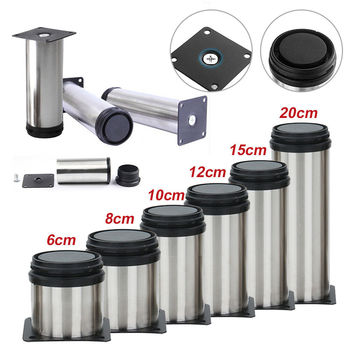
Modern cabinet hardware procurement is not merely an aesthetic choice; it is an exercise in structural safety, metallurgical compatibility, and moisture barrier integrity. When commercial fixtures or luxury kitchens fail in the field, moisture penetration and thread collapse at floor level are the leading causes. Foshan EHOME Hardware Co., Ltd. engineers every adjustable leg to eliminate these vulnerabilities.
1. Grade Selection: SUS304 vs. SUS201 Corrosion Resistance
Global procurement teams must balance unit costs with application exposure. While both grades can achieve an immaculate brushed satin or mirror finish, their molecular behavior in the presence of chlorides differs sharply:
- Grade SUS304 (Austenitic 18/8 Stainless Steel): Formulated with 18% chromium and 8% nickel, creating an active chromium oxide passive film. Crucial for food preparation zones, commercial washrooms, restaurants, and tropical or coastal regions where moisture and cleaning detergents provoke severe pitting in cheaper alloys.
- Grade SUS201 (High-Manganese Stainless Steel): Substituted with manganese and nitrogen to reduce cost while retaining high tensile strength. Excellent for dry interior living room consoles, office modular furniture, and store retail displays where direct water contact does not occur.
2. Dynamic vs. Static Load Capacities
A frequent error identified in global procurement specifications is the failure to distinguish between static weight and dynamic operational stresses. When fully laden stone countertops (such as 30 mm engineered quartz) are positioned onto cabinetry, dynamic impacts from door slams, shifting kitchen appliances, or uneven floor settlements exert concentrated shear forces on leg threads. Our precision cold-rolled inner spindles and reinforced virgin PA66 poly base footings ensure that static capacity (up to 350 kg per point) remains stable even when the foot is adjusted to its maximum safe stroke of 15 mm.
3. Preventing Thread Binding & Galling
Stainless steel fastener threads have a notorious tendency to cold-weld or "gall" under high-pressure friction. Foshan EHOME Hardware Co., Ltd. solves this problem by integrating precision polymer thread liners and CNC-cut metric pitch guides. This hybrid mechanical structure eliminates metal-on-metal galling, allows installers effortless finger adjustments on uneven concrete slabs, and insulates the stainless steel body from alkaline floor dampness.