Selecting a supplier for Stainless Steel Glass Standoff Pins takes more than comparing unit prices. These fittings secure glass panels while leaving a visible gap, so material quality, dimensions, and finish all matter. A pin that looks polished in a catalog may still disappoint if its threads fit poorly or its surface marks easily. Small details show up.
This 2026 guide introduces suppliers and the practical questions buyers can use to assess them. Look for clear specifications, consistent material descriptions, sample availability, and responsive technical support. Ask about pin diameter, projection length, thread type, load guidance, and compatibility with the intended glass assembly. For outdoor projects, confirm the supplier’s stated corrosion-resistance information rather than relying on a generic “stainless steel” label. Compare lead times and packaging, too; scratched finishes can create avoidable installation delays.
Supplier lists are starting points, not guarantees. No supplier is perfect. Product ranges, quality controls, and service can vary between orders, and public information may not reveal every production detail. Request current drawings or samples before committing to a large purchase. Where possible, have a qualified installer or engineer check that the selected hardware suits the panel and mounting surface. A careful review takes time, but it can prevent costly rework. The aim here is a grounded shortlist—not a promise that one name fits every project.
What Stainless Steel Glass Standoff Pins Are and How They Work
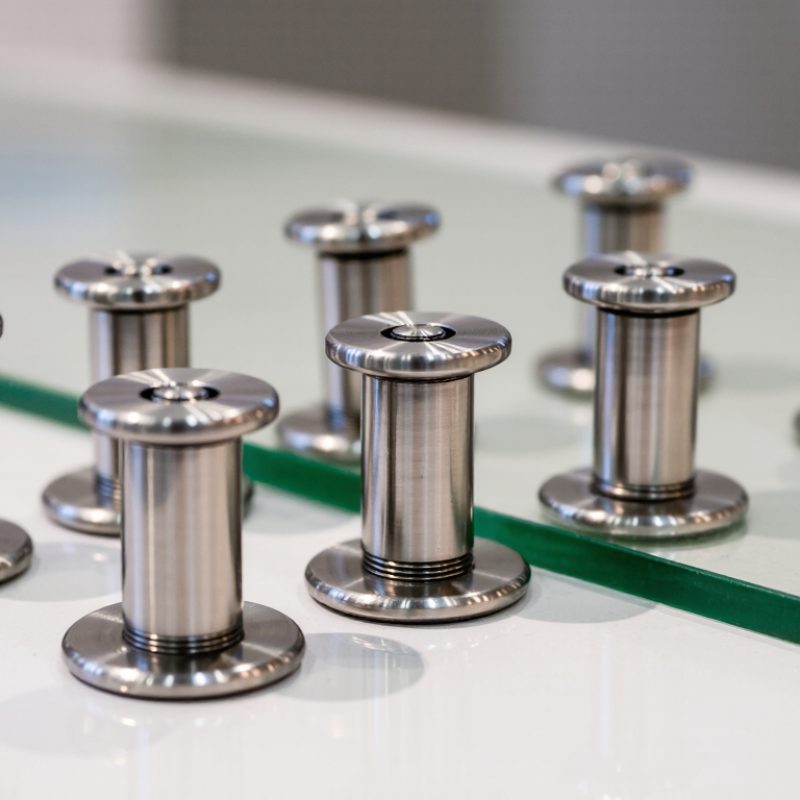
Stainless steel glass standoff pins are compact fittings that hold a glass panel away from a wall or frame. Each pin usually has a fixed base, a projecting barrel, and a cover that secures the glass. The gap creates a neat floating appearance and leaves space for light to pass behind the panel. Many installations require holes drilled in the glass before tempering, so pin locations must be confirmed early. Some systems use other fastening methods; check the fitting design rather than assuming every pin works the same way.
The base anchors to a suitable surface, while the pin and cover support the panel through its prepared holes. A washer or gasket between metal and glass helps reduce direct contact and local stress. Tighten the fitting evenly, but do not treat “firmer” as “safer.” Too much pressure can damage glass. The wall material, panel weight, pin spacing, and exposure to moisture all affect the choice of hardware. Stainless steel can resist corrosion, but grade and finish still matter near salt or persistent condensation. Small details count. Even a carefully polished fitting cannot compensate for an unsuitable anchor or poor alignment. Check the supplier’s load data and installation instructions for the specific system.
2026 Top Stainless Steel Glass Standoff Pins Suppliers - What Stainless Steel Glass Standoff Pins Are and How They Work
Stainless steel glass standoff pins are hardware assemblies that hold glass panels away from a supporting surface. The guide below compares common product configurations and practical supplier-selection criteria; it does not rank or endorse individual companies.
| Comparison dimension | Common options or facts | How it works / what to check |
|---|---|---|
| Basic assembly | Typically includes a mounting base or barrel, a cover cap, a threaded fastener, and a compressible gasket or washer. | The base anchors to a wall, frame, or other support. The cap and fastener secure the glass while the gasket cushions contact and helps distribute clamping pressure. |
| Stainless steel grade | Type 304 and Type 316 are common stainless-steel choices for architectural hardware. | Type 316 contains molybdenum and generally offers better resistance to chloride-related corrosion than Type 304. Confirm the grade and intended environment with the supplier. |
| Surface finish | Common finishes include satin/brushed and polished surfaces; exact appearance depends on the product and manufacturing process. | Request finish details and samples when visual consistency matters. A finish designation alone does not establish corrosion performance. |
| Glass compatibility | Standoff systems are offered for glass panels with pre-drilled holes; hole diameter and glass thickness are product-specific. | Confirm the hardware dimensions before glass fabrication. Holes in tempered glass must be made before tempering; tempered glass should not be drilled or cut afterward. |
| Mounting substrate | Possible supports include concrete, masonry, timber, and steel framing, using suitable anchors or screws for the substrate. | The fastener and anchor must be selected for the actual substrate and loads. The standoff itself does not determine the capacity of the complete installation. |
| Projection from support | Available projection lengths vary by product; suppliers commonly offer multiple sizes or made-to-order configurations. | Measure the required clearance, including the glass and any wall irregularities. Compare the drawing’s projection dimension rather than relying on product photos. |
| Load and safety information | Load capacity depends on the hardware, glass, spacing, substrate, anchors, installation, and applicable design requirements. | Ask for project-specific engineering information and installation instructions. Do not treat a component rating as the capacity of the entire glass assembly. |
| Supplier documentation | Useful documents include dimensional drawings, material specifications, finish details, installation guidance, and applicable test or compliance documents. | Check that documents refer to the exact model and configuration being quoted. Ask about tolerances, replacement parts, and order-specific inspection records when relevant. |
| Typical applications | Examples include interior glass partitions, display panels, signs, and architectural cladding, subject to suitable product design and approvals. | For guards, balustrades, overhead glazing, or other safety-critical uses, verify that the complete system is designed and approved for the applicable code and project conditions. |
Selection note: Confirm material grade, dimensions, glass-hole requirements, substrate fasteners, project loads, and installation details before ordering. Product availability and specifications vary by supplier.
FAQS
They hold glass slightly away from a wall or support. The gap creates a shadow line and can make signs appear lighter.
They can secure lobby directories, retail shelves, office signs, and interior partition panels. Each setup needs suitable pin dimensions and spacing.
Check pin diameter, shoulder length, thread engagement, glass-hole diameter, and spacing. A few millimeters can affect how evenly a panel sits.
Ask for material specifications and mill test certificates linked to the shipment’s heat numbers. Broad material availability alone proves little.
They may be, but check corrosion resistance, finish details, and exposure to moisture or salt. Ask about compatible washers or gaskets.
Request test results that state the glass thickness, hole size, and mounting conditions. Compare working loads, not only peak failure loads.
A sample can reveal burrs, loose threads, poor fit, or movement. It cannot confirm consistency across an entire order. Worth remembering.
Compare the pin finish with nearby hardware, and ask whether later parts will match. Finishes and dimensions can vary between orders. One detail I might miss.
Conclusion
This guide explains what Stainless Steel Glass Standoff Pins are and how they secure glass panels while creating a clean, floating appearance. It outlines how to consider material grade, pin diameter and length, surface finish, glass thickness, and expected loads when selecting hardware. Because requirements vary by project, compatibility and installation conditions should be assessed before choosing a specification.
The article also reviews common uses in architectural and commercial settings, including glass partitions, display areas, and exterior-facing installations. It offers practical criteria for evaluating suppliers, such as product consistency, available customization, technical documentation, quality control, and delivery support. A 2026 supplier comparison can help buyers organize their options, but the best choice depends on the project’s design, performance needs, and installation requirements.